
Our blog

Outdoor Tips, Ideas, and Inspiration From Finest Turf
Why Your DFW Yard Turns to Mud After Every Rain and How to Fix It for Good
Why Your DFW Yard Turns to Mud After Every Rain and How to Fix It for Good
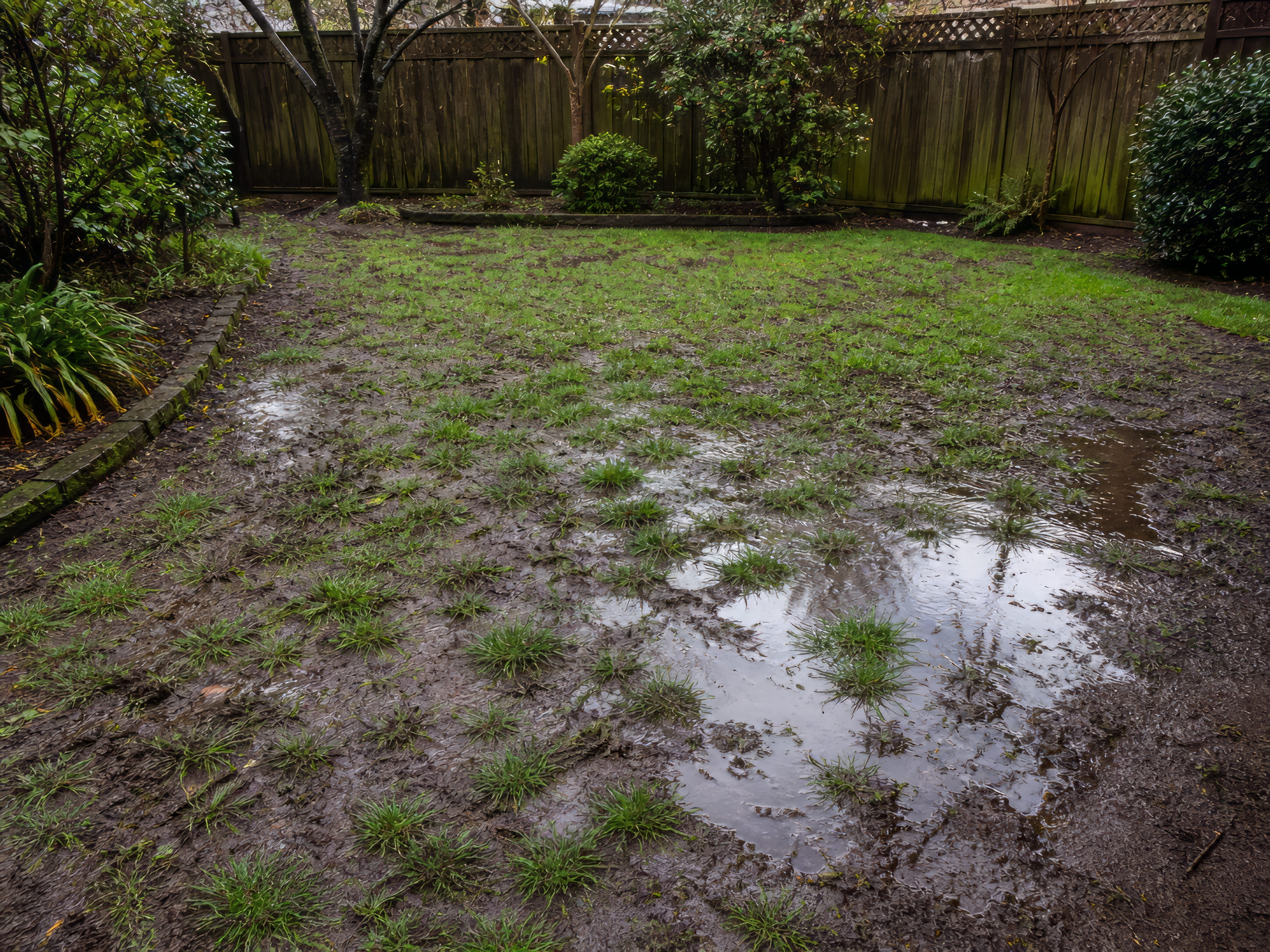
If you live in the Dallas-Fort Worth area, you’ve probably seen it happen. A spring storm rolls through, and the next day your backyard is a soggy, muddy mess. Your dogs track mud into the house, your kids can’t play outside, and bare patches in the lawn turn into puddles that take days to dry out.
A muddy yard is one of the most common frustrations for North Texas homeowners. The good news is that it’s fixable. In this guide, we’ll explain why DFW yards get so muddy, the warning signs to watch for, and the long-term muddy yard solutions that actually work.
Why DFW Yards Get So Muddy
Clay Soil
Much of North Texas sits on expansive clay soil. Clay particles are very fine and pack tightly together, so water soaks in slowly. When it rains, water often sits on the surface or in low spots instead of draining away. Once clay is saturated, it becomes sticky and muddy.
Bare Spots
Grass helps hold soil in place. When grass wears out from foot traffic, pets, or shade, bare soil is left exposed. Those areas turn into mud quickly after rain.
Poor Grading
If your yard is flat or slopes toward your house, water has nowhere to go. Low spots collect water and stay muddy long after the storm ends.
Roof Runoff
Gutters and downspouts send large amounts of water into specific areas of your yard, often side yards and spots near the foundation.
Heavy Foot and Pet Traffic
Paths worn by kids, dogs, and daily walking compact the soil and kill grass, creating muddy trails.
Shade
Shaded areas dry out more slowly and often have thin grass, making them prime spots for mud.
Signs Your Yard Has a Drainage Problem
- Standing water hours or days after rain
- Bare, muddy patches in the same spots every time
- Muddy paths along fences or between doors and gates
- Water pooling near your foundation
- Soggy side yards near downspouts
- Constant mud tracked into your home
Long-Term Muddy Yard Solutions
Quick fixes like spreading mulch or throwing down new grass seed often don’t last. To fix a muddy yard for good, you need to address both the surface and the drainage.
1. Regrade the Yard
Proper grading shapes the ground so water flows away from your home and out of low spots. Grading is often the foundation of any lasting muddy yard solution, and it’s a key step in turf, paver, and concrete installations.
2. Install Artificial Turf
Artificial turf is one of the most effective solutions for muddy yards. A professional turf installation removes the problem soil at the surface, replaces it with a compacted base that drains well, and covers it with turf that water can pass through. The result is a green yard that stays usable after rain, without mud or bare spots.
3. Add Paver Walkways
If mud forms along your main walking routes, paver walkways give people and pets a clean path. Pavers built on a proper base help keep feet off the mud.
4. Pour Concrete Walkways or Pads
Concrete walkways and pads are great for high-traffic routes and areas like trash bin storage, side yards, and utility zones. They provide a solid, clean surface that won’t turn muddy.
5. Extend Your Patio
Muddy areas right outside the back door are common. Extending your patio with concrete or pavers creates a clean landing zone so mud doesn’t get tracked inside.
6. Address Downspouts
Directing gutter water away from the house and problem areas helps prevent soggy spots. When planning turf or hardscape, make sure downspout runoff is part of the drainage plan.
7. Combine Solutions
The most effective fix is usually a combination: grading to move water, turf for green areas, and pavers or concrete for paths and gathering spots.
Muddy Yard Solutions for Specific Areas
Dog Runs and Fence Lines
Pet-friendly artificial turf with good drainage replaces muddy dog paths with a clean surface your pets can enjoy.
Side Yards
Side yards often combine shade, foot traffic, and roof runoff. Turf, paver paths, or concrete walkways, along with proper grading, can transform them.
Play Areas
Turf creates a clean play surface that’s ready to use soon after rain.
Back Door Landing Zones
A patio extension or paver area outside the back door stops mud at the source.
Why Base Preparation Is Everything
Whether you choose turf, pavers, or concrete, the secret to a mud-free yard is what’s underneath. In DFW, clay soil doesn’t drain well on its own. A professional installation removes the top layer of soil, grades the area properly, and builds a compacted base that supports the surface and helps water move away. Without this step, even new turf or pavers can develop puddles or uneven areas.
Frequently Asked Questions About Muddy Yards
Will artificial turf fix my muddy yard?
In many cases, yes. Turf installed over a properly graded and compacted base helps eliminate mud and bare spots.
Can I just plant more grass?
New grass often struggles in the same conditions that caused the mud, such as shade, clay, and traffic.
What about the area by my downspouts?
Downspout runoff should be part of your drainage plan so water is directed away from problem spots.
Can I fix just the worst areas?
Yes. Many homeowners start with the muddiest areas, like dog runs, side yards, or the back door.
Say Goodbye to Muddy Shoes and Muddy Paws
A muddy yard doesn’t have to be something you live with every rainy season. By understanding why your yard holds water and investing in long-term muddy yard solutions like grading, artificial turf, pavers, and concrete, you can create an outdoor space that stays clean and usable all year.

Ready to Fix Your Muddy Yard Once and For All?
If you’re tired of muddy paws, dirty floors, and a backyard you can’t use for days after it rains, Finest Turf can help. We work with homeowners across the DFW Metroplex to solve muddy yard problems with long-lasting solutions built for North Texas clay soil. Whether you need pet-friendly artificial turf for a muddy dog run, a turfed side yard that handles roof runoff, a paver walkway along your most-used path, a concrete pad for trash bins, or a patio extension that stops mud at the back door, our team will help you find the right fix for your property.
We start by looking at where water collects, how your family and pets use the yard, and what’s been causing the mud. Then we plan a solution that includes proper grading and a strong, compacted base so your new surfaces stay clean, level, and usable after every storm. You’ll get owner-led service and clear communication from the first consultation through the final walkthrough.
Stop letting the weather decide when you can use your yard. Request your free consultation with Finest Turf today and let’s turn your muddy yard into a clean, green space you can enjoy rain or shine.


