
Our blog

Outdoor Tips, Ideas, and Inspiration From Finest Turf
Is Your Concrete Patio Past Its Prime? Signs It’s Time for a Replacement
Is Your Concrete Patio Past Its Prime? Signs It’s Time for a Replacement
Your concrete patio is supposed to be the heart of your outdoor living space. It’s where you grill, eat dinner outside, relax with a cold drink, and host friends and family. But over time, especially in North Texas, concrete patios can start to show their age. Cracks spread, sections sink, water pools, and what used to feel like a welcoming space starts to look worn and even unsafe.
So how do you know if your patio just needs a little attention or if it’s time for concrete patio replacement? In this guide, we’ll walk through the signs to watch for, why patios fail in DFW, and what to consider when planning a new patio.
Why Concrete Patios Wear Out in North Texas
Expansive Clay Soil
DFW’s clay soil swells when wet and shrinks when dry. That constant movement puts stress on concrete slabs and can lead to cracking, settling, and uneven sections over time.
Poor Original Installation
Many patios, especially builder-grade ones, were installed quickly. A thin slab, weak base, missing reinforcement, or poorly placed control joints can shorten a patio’s life.
Drainage Problems
When water pools on or around a patio, it can soften the soil underneath and lead to settling or erosion.
Weather Extremes
Hot summers, occasional freezes, and heavy storms all take a toll on outdoor concrete.
Age
Even well-built concrete eventually shows wear after many years of use.
Signs It’s Time for Concrete Patio Replacement
Large or Spreading Cracks
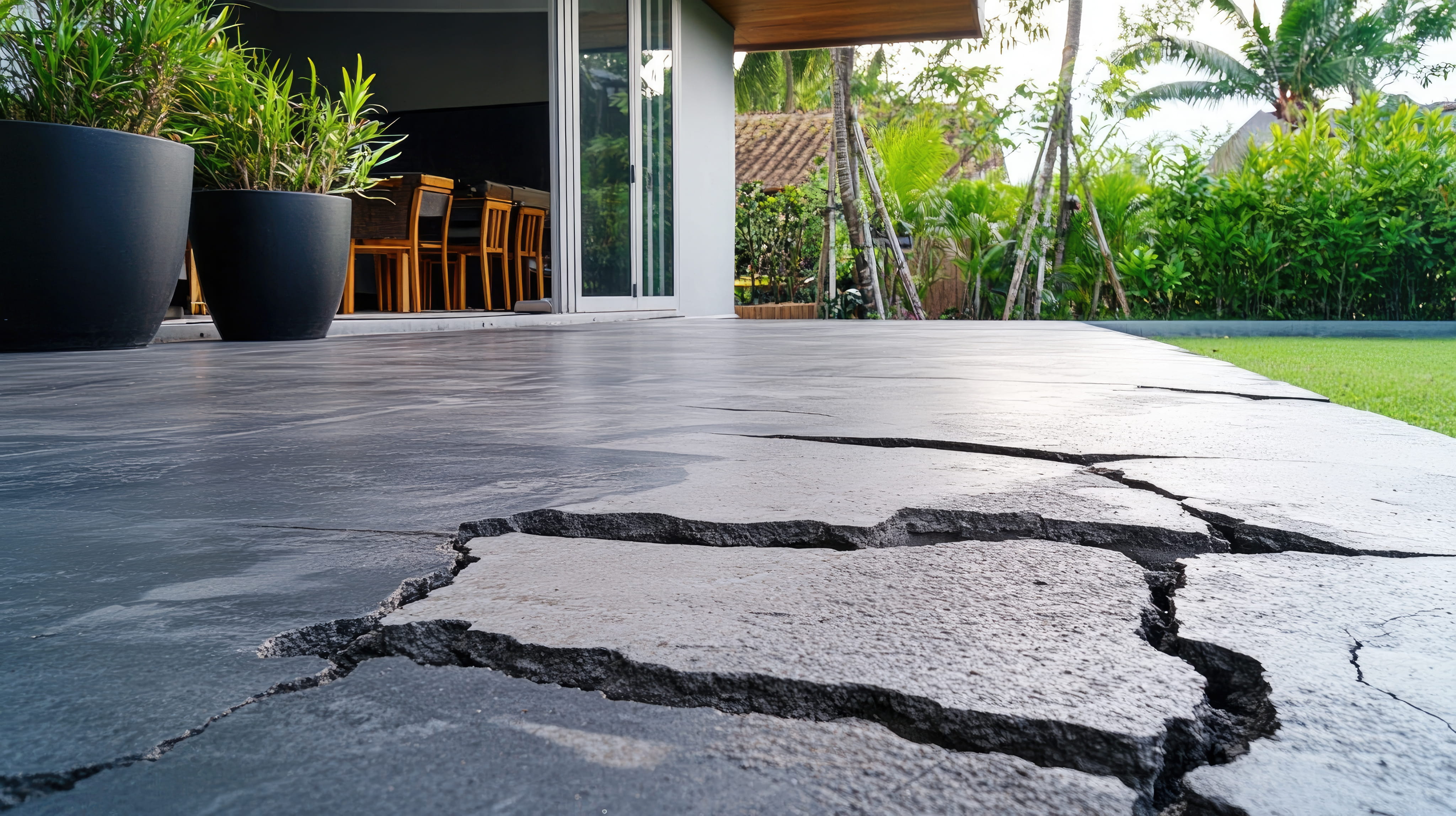
Hairline cracks are common and often cosmetic. But wide cracks, cracks that keep growing, or a network of cracks across the patio can signal deeper problems with the slab or base.
Sinking or Uneven Sections
If parts of your patio have dropped lower than others, the soil underneath may have shifted or eroded. Uneven sections can create tripping hazards.
Water Pooling
A patio should shed water. If puddles form and linger, the slope may have changed due to settling, or the patio was never graded correctly.
Water Flowing Toward Your House
If your patio has settled so that water now flows toward your foundation, it’s a problem worth addressing quickly.
Crumbling, Flaking, or Pitting
Surface damage like flaking or crumbling can mean the concrete is deteriorating.
Heaving or Lifting
Sections that have lifted, sometimes due to soil movement or tree roots, create uneven surfaces and gaps.
Repeated Repairs
If you keep patching the same cracks and problem areas, replacement may be more practical than continued repairs.
The Patio No Longer Fits Your Needs
Sometimes the patio is in decent shape but simply too small or poorly laid out. Replacement gives you a chance to build the outdoor space you actually want.
Repair vs. Replacement
Not every crack means you need a new patio.
Repair may work if cracks are small and stable, the patio is level, and drainage is still working.
Replacement is often better if you have widespread cracking, sinking or heaving sections, drainage issues, safety hazards, or you want a larger or redesigned patio.
A professional assessment can help you understand which option makes sense for your patio.
Planning Your Replacement Patio
Replacing your patio is an opportunity to upgrade, not just restore.
Go Bigger
Many homeowners use replacement as a chance to expand their patio to fit a full dining set, lounge area, or grill station.
Consider Pavers.
If you’re replacing concrete, consider whether pavers might fit your style. Pavers offer color, pattern, and flexibility with soil movement.
Mix Materials
A concrete patio with paver borders or accents can create a custom look.
Add Turf Around It
Surrounding your new patio with artificial turf creates a clean, green, low-maintenance yard.
Plan for the Future
Think about whether you might add a fire pit, pergola, or outdoor kitchen later, and design the new patio with those features in mind.
What a Quality Concrete Patio Replacement Includes
To avoid repeating the same problems, a replacement patio should be built with North Texas conditions in mind.
Removal of the old patio. The old concrete is broken up and hauled away.
Soil and site preparation. The area is excavated and graded properly.
Compacted base. A stable base supports the new slab and helps resist soil movement.
Proper slope. The patio is shaped so water drains away from your home.
Reinforcement. Reinforcement helps the concrete hold together.
Control joints. Joints are placed to guide natural cracking into neat, planned lines.
Careful finishing and curing. The surface is finished for your preferred look and traction, then allowed to cure properly.
Caring for Your New Patio
- Sweep regularly and wash occasionally
- Clean stains quickly
- Keep drainage areas and downspout outlets clear
- Avoid harsh chemicals and deicers
- Ask your installer about sealing
Frequently Asked Questions About Patio Replacement
Are small cracks a reason to replace my patio?
Not usually. Small, stable cracks are common. Large, spreading cracks or uneven sections are bigger concerns.
Can I replace my concrete patio with pavers?
Yes. Many homeowners switch to pavers for more design options.
Can you make my new patio bigger?
Absolutely. Replacement is a great time to expand.
How can I keep my new patio from cracking like the old one?
Proper base preparation, reinforcement, drainage, and control joints all help.
A Fresh Start for Your Outdoor Space
If your patio is cracked, sinking, or no longer fits your lifestyle, concrete patio replacement can give your backyard a fresh start. With better planning and preparation designed for North Texas soil, your new patio can be stronger, safer, and better suited to how you live.

Ready to Replace That Worn-Out Patio With Something Better?
You shouldn’t have to step around cracks, worry about tripping on uneven slabs, or watch water pool every time it rains. At Finest Turf, we help homeowners across the DFW Metroplex replace tired, damaged patios with new outdoor surfaces built to last. Whether you want a stronger concrete patio in the same spot, a larger patio with room for dining and lounging, a switch to pavers for a more custom look, a mix of concrete and paver accents, or a complete backyard refresh with artificial turf surrounding your new patio, our team can help you plan it from start to finish.
We take the time to understand what went wrong with your old patio and how you want to use your new one. Then we build with the details that matter in North Texas: thorough site preparation, a well-compacted base, proper slope for drainage, reinforcement, and well-placed control joints. With owner-led service and clear communication from your first consultation to the final walkthrough, you’ll always know what’s happening with your project.
Give your backyard the patio it deserves. Schedule your free consultation with Finest Turf today and let’s build a stronger, better patio for your home.


