
Our blog

Outdoor Tips, Ideas, and Inspiration From Finest Turf
How to Care for Your Paver Patio So It Looks Great for Years
How to Care for Your Paver Patio So It Looks Great for Years
A paver patio is one of the best investments you can make in your backyard. It adds style, creates a dedicated space for outdoor living, and holds up well to daily use. But like any outdoor surface, pavers need a little care to keep looking their best, especially in North Texas, where heat, storms, pollen, and clay soil all play a role.
The good news is that paver patio maintenance is simple. With a few easy habits, you can keep your pavers clean, stable, and attractive for years. In this guide, we’ll cover routine care, seasonal tips, and how to handle common issues like weeds, stains, and washed-out joint sand.
Why Paver Patio Maintenance Matters
Regular care helps:
- Keep pavers looking clean and vibrant
- Maintain joint sand that locks pavers together
- Prevent weeds from taking hold
- Reduce stains from food, grease, and leaves
- Catch small issues before they become bigger problems
A few minutes here and there goes a long way.
Routine Paver Patio Maintenance
Sweep Regularly
Sweeping removes dirt, leaves, and debris that can stain pavers or provide a place for weeds to grow. A stiff broom or leaf blower works well.
How often: Weekly or as needed.
Rinse Occasionally
A garden hose helps wash away dust, pollen, and light dirt. During heavy pollen seasons in DFW, rinsing keeps your patio looking fresh.
How often: Every few weeks.
Deep Clean as Needed
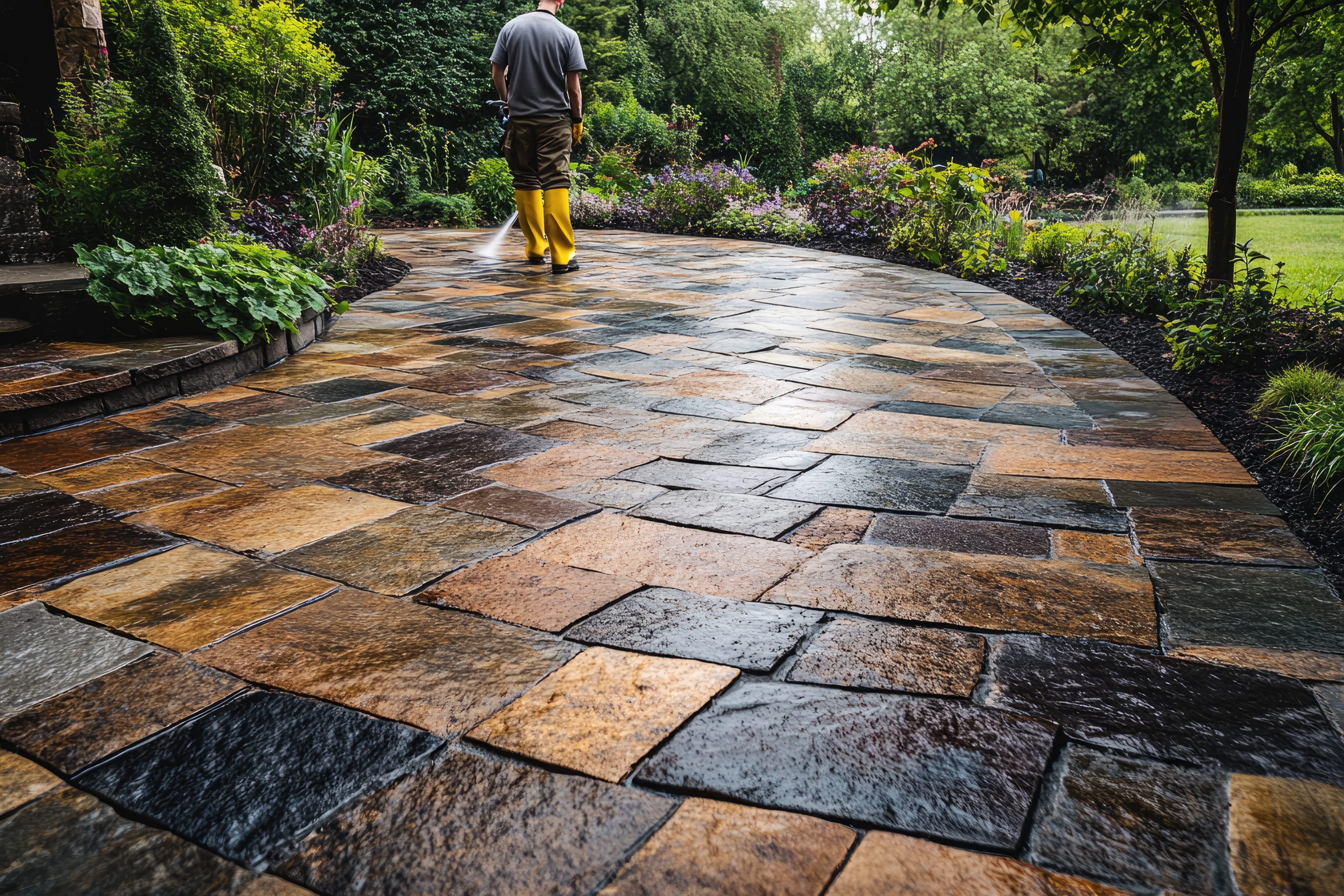
For a deeper clean, use a mild soap or a cleaner made for pavers and a stiff brush. Rinse thoroughly afterward. If using a pressure washer, use a lower setting and keep the nozzle at a safe distance to avoid blasting out joint sand or damaging the paver surface.
How often: Once or twice a year, or when needed.
Caring for Joint Sand
Joint sand fills the gaps between pavers, locking them together and helping keep the surface stable. Over time, rain, cleaning, and wear can wash some of it out.
Signs you need more joint sand:
- Visible gaps between pavers
- Pavers that feel loose or shift slightly
- Weeds growing in the joints
How to refill: Sweep joint sand into the gaps, then lightly mist to settle it. Some homeowners use polymeric sand, which hardens to help resist washout and weeds. Ask your installer which type is right for your patio.
Preventing and Removing Weeds
Weeds and grass can sprout between pavers, especially if joints are low on sand or debris collects in the gaps.
- Pull weeds early, before roots spread
- Keep joints filled with sand
- Sweep debris regularly so seeds don’t settle in joints
- Consider polymeric sand for added resistance
Handling Common Stains
Food and Drink Spills
Clean spills quickly with mild soap and water.
Grease and Oil
Grills can drip grease onto pavers. Blot spills immediately and use a degreaser made for pavers if needed. A grill mat can help prevent future stains.
Leaf and Tannin Stains
Leaves left on pavers can leave stains. Regular sweeping and blowing help prevent this.
Rust Stains
Metal furniture and planters can leave rust marks. Use a rust remover designed for pavers and place protective pads under metal items.
Efflorescence
A white, powdery haze sometimes appears on new pavers as natural minerals rise to the surface. It typically fades over time and can be cleaned with products made for efflorescence.
Should You Seal Your Pavers?
Sealing pavers can help:
- Enhance and protect color
- Resist stains
- Help stabilize joint sand
- Make cleaning easier
Not every patio needs sealing, and the right timing depends on the type of pavers and conditions. Ask your installer whether sealing is recommended for your patio and how often it should be done.
Seasonal Paver Patio Maintenance in DFW
Spring
Rinse off pollen, sweep debris from storms, check joint sand, and pull any weeds that appeared.
Summer
Clean grill stains promptly, rinse dust buildup, and keep furniture pads in place to prevent marks.
Fall
Sweep or blow leaves often to prevent tannin stains and debris buildup in joints.
Winter
Clear debris, avoid metal shovels that can chip pavers, and avoid harsh deicers that may damage the surface.
Watching for Bigger Issues
Pavers are flexible and durable, but keep an eye out for:
Sinking or uneven areas. This may indicate base settling.
Loose pavers. Often caused by washed-out joint sand or edge issues.
Water pooling. May mean the slope has changed.
Shifting edges. Edge restraints help keep pavers in place.
One of the advantages of pavers is that individual sections can often be lifted, re-leveled, and reset without replacing the entire patio.
Frequently Asked Questions About Paver Maintenance
Can I pressure wash my pavers?
Yes, but use a lower setting and keep a safe distance to protect joint sand and the paver surface.
How often should I refill joint sand?
Check periodically and refill when gaps appear.
Do I need to seal my pavers?
It depends on your pavers and goals. Ask your installer for a recommendation.
What if a paver sinks?
Individual pavers can often be lifted and reset.
Simple Care, Lasting Beauty
Paver patio maintenance doesn’t take much time, but it makes a big difference. Regular sweeping, occasional cleaning, maintaining joint sand, and handling stains quickly will keep your pavers looking beautiful for years.

Ready for a Paver Patio Built to Look Great for the Long Haul?
Great-looking pavers start with great installation. At Finest Turf, we design and install paver patios, walkways, fire pit areas, and turf and paver designs for homeowners across the DFW Metroplex. Whether you’re planning your first paver patio, extending an existing concrete patio, creating a backyard gathering space, or adding a modern design that combines pavers with clean green artificial turf, our team will help you create a space that’s both beautiful and easy to care for.
We focus on the details that make maintenance simpler down the road: a well-compacted base designed for North Texas clay soil, proper slope for drainage, secure edge restraints, and joint sand that locks everything together. During your final walkthrough, we’ll share care tips so you know exactly how to keep your pavers looking their best. From the first consultation onward, you’ll get owner-led service and clear communication you can count on.
Build a patio you’ll be proud of for years. Request your free consultation with Finest Turf today and let’s create a paver space your family will enjoy every season.


