
Our blog

Outdoor Tips, Ideas, and Inspiration From Finest Turf
How Artificial Turf Drains: What Happens Below the Surface When It Rains
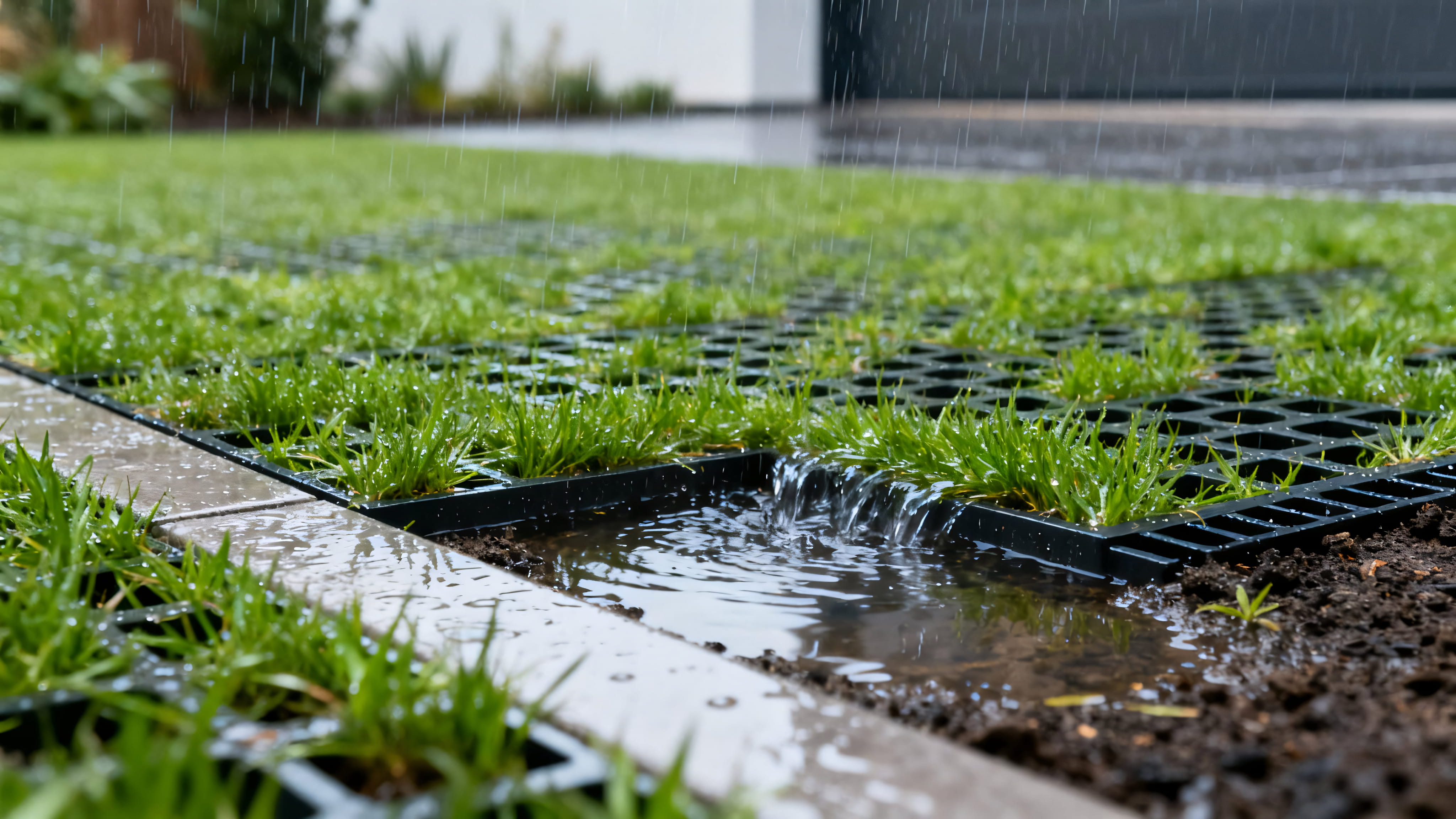
How Artificial Turf Drains: What Happens Below the Surface When It Rains
North Texas is known for sudden, heavy rainstorms. One minute it’s sunny, and the next, inches of rain are pouring down. For homeowners considering artificial turf, a common question is: “Does artificial turf drain well?”
The short answer is yes, when it’s installed correctly. Artificial turf drainage depends on a system of components working together, from the turf backing to the base and grading underneath. In this guide, we’ll explain how artificial turf drains, what affects drainage, and how to make sure your turf handles DFW storms.
The Turf Drainage System
Artificial turf drainage isn’t just about the turf. It’s a system with several layers.
1. The Turf
Most residential artificial turf is designed to allow water to pass through. Turf backings are typically either perforated with drainage holes or made of a permeable material that lets water flow through more evenly.
2. The Infill
Infill sits between turf fibers. Water passes through infill on its way to the backing.
3. The Weed Barrier
A permeable weed barrier allows water to pass through while helping block weeds.
4. The Base
The base is a compacted layer of material beneath the turf. It provides stability and allows water to move through and away.
5. The Subgrade
The native soil below the base is shaped and graded so water flows in the right direction.
6. Grading
The overall slope of the yard directs water away from your home and toward appropriate drainage areas.
When all of these components work together, water moves through the turf, into the base, and away from the surface.
Why North Texas Clay Matters
DFW’s clay soil doesn’t absorb water quickly. On its own, clay can cause water to pool on the surface. That’s why the base and grading are so important. A properly built base gives water a place to go and helps it move along the slope rather than sitting on top of compacted clay.
Perforated vs. Permeable Backing
Perforated Backing
Perforated turf has small holes punched throughout the backing. Water drains through these holes.
Fully Permeable Backing
Some turf products use a backing that allows water to pass through more evenly across the surface. These are often recommended for pet areas because they help liquids drain more uniformly.
Your installer can recommend the right backing for your yard and how it will be used.
What Causes Poor Turf Drainage?
- Turf laid over compacted soil without a proper base
- Inadequate grading or flat areas with no slope
- Base material that holds water instead of draining
- Low spots where water collects
- Clogged infill or debris buildup
- Downspouts dumping water directly onto turf
Signs of Drainage Problems
- Water pooling on the turf after rain
- Soggy or squishy areas
- Persistent odors in pet areas
- Turf that stays wet long after storms
- Mud appearing around edges
How to Ensure Good Turf Drainage
Choose Professional Installation
Proper excavation, base material, compaction, and grading are essential for drainage.
Plan for Downspouts
Direct gutter water so it doesn’t overwhelm specific turf areas.
Address Low Spots
Low areas should be graded during installation so water doesn’t collect.
Choose the Right Turf for Pet Areas
Pet areas benefit from turf designed for strong, even drainage.
Keep the Surface Clean
Blow leaves and debris off the turf so they don’t block drainage.
Brush Regularly
Brushing keeps infill loose and evenly spread.
Turf Drainage vs. Natural Grass
Natural grass on clay soil often struggles after heavy rain, leaving muddy spots and puddles. A well-installed turf system can actually improve how quickly your yard becomes usable after a storm, because the base and grading are specifically designed to move water.
Frequently Asked Questions
Does artificial turf drain well?
Yes, when installed with proper base preparation and grading.
Will turf flood during heavy rain?
During extreme storms, any yard can see temporary standing water. A properly installed turf system helps water drain as quickly as conditions allow.
What’s the best turf for drainage?
Turf with permeable backing is often recommended for pet areas. Your installer can suggest the best option.
Can turf fix a yard that floods?
Turf with proper grading and base work can greatly improve drainage, but severe drainage issues may need additional solutions.
Rain or Shine, a Yard You Can Use
Artificial turf drainage works because of what’s underneath. With the right turf backing, a properly built base, and smart grading designed for North Texas clay, your turf can handle heavy storms and be ready to use soon after the rain stops.

Want a Turf Lawn That Handles DFW Storms?
Great drainage is built from the ground up. At Finest Turf, we install artificial turf for homeowners and businesses across the DFW Metroplex with drainage at the center of every project. We remove existing grass and soil, grade your yard so water flows away from your home, build and compact a base designed for North Texas clay soil, and recommend turf backings suited to how you’ll use each area. Whether you’re planning a family backyard, a pet-friendly dog run, a side yard that gets heavy roof runoff, or a complete yard with turf, pavers, and concrete, we’ll make sure water has somewhere to go.
We’ll walk your yard with you, look at low spots and downspouts, and explain exactly how we’ll manage drainage on your property. You’ll get owner-led service and clear communication from your first consultation through the final walkthrough.
Stop waiting days for your yard to dry out. Schedule your free consultation with Finest Turf today and let’s build turf that’s ready for whatever the Texas sky brings.


