
Our blog

Outdoor Tips, Ideas, and Inspiration From Finest Turf
Cracks in Your Concrete Patio: What’s Normal, What’s Not, and What to Do About It
Cracks in Your Concrete Patio: What’s Normal, What’s Not, and What to Do About It
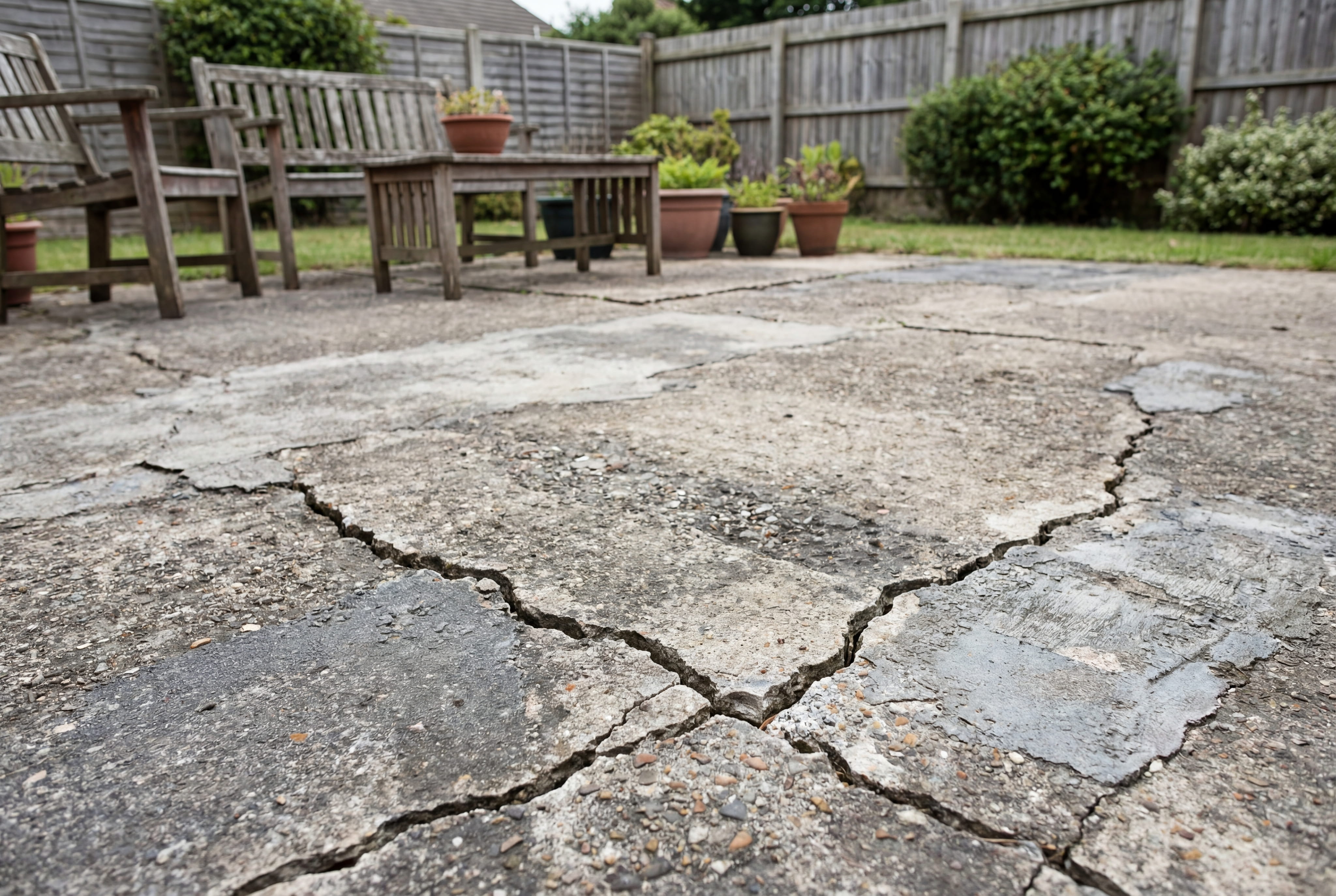
Few things cause more worry for homeowners than spotting a crack in their concrete patio. Is it a sign of a serious problem? Will it keep spreading? Does the patio need to be replaced?
The truth is that some cracking is normal with concrete, especially in North Texas, where clay soil and extreme weather put stress on outdoor slabs. But not all cracks are created equal. In this guide, we’ll explain why concrete cracks, which cracks are usually harmless, which ones deserve attention, and how proper installation helps reduce cracking.
Why Concrete Cracks
Shrinkage
As concrete cures, it loses moisture and shrinks slightly. This shrinkage can cause small cracks, especially early in a slab’s life.
Temperature Changes
Concrete expands in heat and contracts in cold. DFW’s hot summers and occasional freezes create repeated movement.
Expansive Clay Soil
North Texas clay soil swells when wet and shrinks when dry. This movement beneath a slab is one of the biggest causes of cracking in DFW patios.
Poor Base Preparation
A weak or improperly compacted base can allow sections of a slab to settle unevenly.
Missing or Poorly Placed Control Joints
Control joints are designed to guide cracking into straight, planned lines. Without them, cracks form randomly.
Lack of Reinforcement
Reinforcement helps hold concrete together. Without enough of it, cracks may widen or spread.
Heavy Loads
Patios supporting heavier items than they were designed for can crack.
Drainage Problems
Water pooling around or under a patio can soften soil and lead to settling.
Tree Roots
Roots growing beneath a slab can lift and crack concrete.
Types of Concrete Cracks
Hairline Cracks
Thin, surface-level cracks that are barely visible. These are often caused by shrinkage and are usually cosmetic.
Level of concern: Usually low.
Cracks Along Control Joints
Cracks that form within control joints are doing exactly what they’re designed to do.
Level of concern: Normal and expected.
Settlement Cracks
Cracks that occur when part of the slab sinks lower than the rest.
Level of concern: Worth watching, especially if one side is lower than the other.
Heaving Cracks
Cracks caused by soil or roots pushing the slab upward.
Level of concern: Can create tripping hazards and may need attention.
Widening or Spreading Cracks
Cracks that grow wider or longer over time.
Level of concern: Higher. These may indicate ongoing movement.
Map or Spiderweb Cracking
A network of small surface cracks, often related to surface finishing or curing conditions.
Level of concern: Usually cosmetic, but can affect appearance.
Signs a Crack Needs Attention
- The crack is getting wider or longer
- One side of the crack is higher than the other
- The crack creates a tripping hazard
- Water pools near the crack
- Water drains toward your home’s foundation
- Pieces of concrete are breaking off
- Many cracks are spreading across the patio
What to Do About Patio Cracks
Monitor Small Cracks
Take photos and note the size of small cracks. If they don’t change, they’re likely cosmetic.
Keep Drainage Clear
Make sure water drains away from your patio and home. Redirect downspouts if needed.
Consider Sealing Small Cracks
Sealing hairline cracks can help keep water out. Ask a professional about appropriate products.
Address Uneven Sections
If cracks create uneven surfaces or tripping hazards, repair or replacement may be needed.
Evaluate Replacement
When cracking is widespread, sections have sunk or lifted significantly, or drainage has changed, replacing the patio with proper preparation may be the best long-term solution.
How Proper Installation Reduces Cracking
While no concrete is completely crack-proof, quality installation greatly reduces problems.
Thorough site preparation. Removing unsuitable soil and grading properly.
A compacted base. Creating a stable foundation that helps resist soil movement.
Reinforcement. Helping the slab hold together.
Well-placed control joints. Guiding cracks into neat, planned lines.
Proper slope. Directing water away from the patio and home.
Careful curing. Allowing concrete to gain strength properly.
Concrete vs. Pavers for Crack Concerns
If you’re especially concerned about cracking, pavers may be worth considering. Because pavers are individual units, they handle soil movement without showing the same kind of continuous cracks. Many homeowners combine concrete and pavers to balance their benefits.
Frequently Asked Questions
Is it normal for a new concrete patio to crack?
Some minor cracking can be normal, especially hairline shrinkage cracks or cracks within control joints.
When should I worry about patio cracks?
Watch for cracks that widen, create uneven surfaces, or affect drainage.
Can cracked concrete be repaired?
Small cracks can sometimes be sealed. Larger problems may require section or full replacement.
How can I prevent cracks in a new patio?
Proper base preparation, reinforcement, control joints, and drainage all help.
Know the Difference, Protect Your Patio
Not every crack is a cause for alarm. By understanding which cracks are normal and which need attention, you can protect your patio and make smart decisions about repairs or replacement.

Concerned About Cracks? Let’s Take a Closer Look.
If your concrete patio is showing cracks that are widening, creating uneven surfaces, or causing water to pool, Finest Turf can help you understand what’s going on and what your options are. We build concrete patios, walkways, and pads for homeowners across the DFW Metroplex, and we know how North Texas clay soil affects concrete over time. Whether you need a replacement patio built on a stronger foundation, a larger patio designed for how your family lives, a switch to pavers, or a combination of concrete, pavers, and artificial turf, we’ll give you honest guidance.
When we build concrete surfaces, we focus on the details that help reduce cracking: thorough site preparation, a well-compacted base, reinforcement, well-placed control joints, proper slope for drainage, and careful curing. You’ll get owner-led service and clear communication from your first consultation through the final walkthrough.
Get peace of mind about your patio. Request your free consultation with Finest Turf today and let’s find the right solution for your outdoor space.


